
A sermon preached for a harvest festival based on Genesis 41:14-36 and Luke 12:16-34.
We are here today celebrating the harvest. To quote a hymn we’re not going to sing today, “All is safely gathered in, ere the winter storms begin”. But is it? Does anyone know how successful or otherwise this year’s harvest has been?
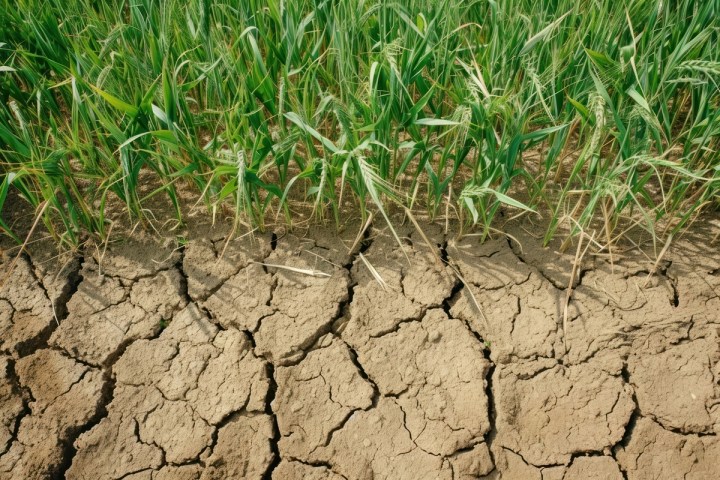
This harvest has been a particularly bad one. The harvest of key crops in the UK (wheat, barley, oats and oil seed rape) is the lowest since records began, 7% lower than the previous lowest in 2020. This is a consequence of a dry April and extremely hot May, June, July and August. Farm incomes are approximately a third less than the 10-year average when adjusted for inflation. Across Europe a similar picture has emerged. Losses are equivalent to the entire grain output of Italy, Belgium and the Netherlands.
This isn’t just a random event of course. This is a consequence of climate change. 5 of the worst UK harvests since records began have been in the last decade. And this is as good as it gets. Although this year’s weather seems extreme by historical standards it is almost certain to be quite mild compared to years in the future. Before climate change, a major corn harvest failure might happen once every 16 years, now at 1.5° of warming it is predicted once every 3 years. If we let the temperature rise to 2° then it will be every other year.
Crop failures have, of course, afflicted humans throughout history. We’ve heard this morning of Joseph predicting seven years of surplus followed by seven years of famine. The story reminds us that there has always been wide annual variability in harvests. It also demonstrates how the worst consequences of such variability can be avoided if we are warned that periods of famine are coming and take sensible precautions . We know that crop yields are going to fall consistently in coming years as a consequence of climate change and we need to prepare for it. Unfortunately, unless we act drastically to stop burning fossil fuels, the prospect is of considerably more than seven years of failing harvests.
We need to consider how we are going to prepare for this new normal. The parable we’ve heard from Luke’s gospel this morning is not intended as teaching about farming methods, but on this particular occasion it does provide a stark warning of how not to deal with food surpluses. We should not greedily hoard surplusses for ourselves. We need to be very wary of any solutions to the coming food crises that are based around the rich and powerful acting out of self-interest and in fear of scarcity.
I logged into a fascinating talk on Zoom hosted by the Green Christian movement last week. It was given by Alex Evans who maintains a blog called the Good Apocalypse Guide. In it he talked about how people respond to major emergencies. Our fear is that if emergencies happen then society will breakdown, that the rule of law will disintegrate and that violence will break out as people look only to save themselves and those closest to them. As Alex pointed out, however, what actually happens almost universally when disaster strikes, is the opposite. People pull together. Think of those pictures of communities clawing their way through earthquake debris with bare hands. Think of how this country reacted through the Second World War. Rationing brought people together with a sense of common purpose. Even if most of the eye witnesses have now died, there is still a powerful folk memory of people pulling together in the face of a common threat. That memory is of Britain as a better place when united in diversity than it is now when it has been divided by affluence.
Alex contrasts the breakdown that we fear as a consequence of major emergencies with the breakthrough that is often the reality. He also sees these as reinforcing feedback loops. If we expect breakdown as a consequence of disaster and start to act in our own self-interest as a consequence, then things get worse. The feared breakdown becomes a reality and a spiral into a very dark place is almost inevitable. If we anticipate breakthrough, however, and pool our resources as a community, then things get better. A belief in breakthrough is nurtured and generates hope for a brighter future.
In a way this is the message of Jesus’ teaching after he tells the parable we have heard this morning. He warns against being overwhelmed by the fear of scarcity and instead to focus on the abundance which many of us enjoy. We shouldn’t be driven by concern for what we don’t have but by gratefulness for what we do.
“Consider the ravens. They do now sow or reap, they have no storeroom or barn; yet God feeds them. How much more valuable are you than the birds?”
“Consider how the wild flowers grow. They do not labour or spin, yet I tell you that not even Solomon in all his glory was dressed like one of these. If this is how God clothes the grass of the field, which is here today is thrown into the fire, how much will he clothe you – you of little faith”.
Before we continue to explore the relevance of these words in the context of the declining harvest, we do have to pause and acknowledge that there are many people in this country and around the world who do not feel as if God is looking after them, who must wonder whethere they are more valuable than the birds. Much of the food on display here today will be going tomorrow to stock the food banks on which so many of those people now rely.
In exploring Jesus’ words on abundance there are at least two approaches to accommodate those who do not experience it. One is to remember that Jesus himself lived an simple life and was preaching to people many of whom would have been barely scraping by themselves. When he preaches about abundance here, he is really meaning anything over and above the bare necessities of existence.
Another approach, perhaps more helpful today, is to remember that, as a nation we are experiencing plenty. We live in one of the most prosperous countries in the world. As a nation we have access to more food than we have ever had. As with so many of the problems in our world today, the issue with food is not how much we have in total, but in how it is distributed. The nation’s reliance on food banks is not driven by a lack of abundance but by our failure to share that abundance equitably. We need to simultaneously give thanks for what we have, and ask repentance for how we fail to share it. In referring to “abundance” from now on, I am referring to that abundance which is available to our nation as a whole, but in doing so I acknowledge that there are many within the country who are excluded from it.
For all that are crop yields are low this year, the green revolution of the late twentieth century means that we produce two to three times as much grain per acre as we did in the 1940s. Even taking population growth into account, global agricultural output per person has increased by over 50% since the 1960s. The amount of food we have in the UK might be less in the future than it is now, but it will still be way in excess of what has been available historically and what most people on this planet have to live on today. If we learn to appreciate this abundance and share accordingly then there is more than enough to feed us all. This is particularly true if we are prepared to modify what and how we eat. A major study from Oxford University has estimated that if the world population were to eat half the meat that it does today, then we could feed the global population adequately with a third of the land that is currently used for agriculture.
If we live in fear of scarcity then those of us who can afford to will hoard food for themselves, prices will be driven up, and those at the other end of the spectrum will not be able to afford even what little they had before. If we follow Jesus’ teaching and celebrate abundance, but are prepared to moderate our consumption in a communal response to a changing world, then there will still be enough for us all to share and thrive.
I went to hear climate comedian Stuart Goldsmith on Friday night. He talked of two scenarios of the future. One is to be driven as individuals by fear of scarcity, to hoard resources for ourselves, to buy guns to protect them and to seal ourselves in bunkers, fearful of everyone else. The other is to come together and celebrate what remains, to work as communities to share that resource and to build a resilient society that can still thrive with less. I know which I think is closer to Jesus’ teaching in Luke’s gospel. I know which I think is closer to the Kingdom of God.
We went on to sing Fred Pratt Green’s hymn “God in his love for us lent us this planet“

