
I found out this week that I’ve been reading Psalm 148 incorrectly all my life. In the past I’ve assumed that it is a list of things that we should praise the Lord for. This year however, I’ve been leading a Lent Course produced by Green Christian which has required me to read the psalm more carefully. It turns out it is not a list of things that we should give praise for but of things that should be praising God alongside us.
This unsettles me a bit. I’ve got a tendency to take words literally and I don’t really buy into the idea that inanimate objects like the sun, moon, stars, mountains, hills are actually capable of giving praise. I’m not much more convinced that plants like fruit trees and cedars are either. For me even the idea that wild animals, cattle, creeping things, flying birds should worship is too fanciful. Surely worship is something that only humans are capable of?
We’re not sure when the Psalm was written but it was at least 2,500 years ago and may be older. How did the original authors intend it to be read? Did they intend it to be taken literally? Did they really believe that snow and frost are called to worship God? Maybe the psalm was a reaction to competing pagan religions that indulged in nature worship. What better counter to the idea that we should worship the sun and the moon can there be, than that the sun and moon should be worshipping the one true God alongside us? Or maybe the psalm contains a hint that the early Jews acknowledged a greater affinity with nature than we do today, mirroring contemporary indigenous communities who regard the earth as a mother (as in Bolivia) or wild animals as relatives (as in North America).
And how should we read the psalm today? I was surprised that of the 28 people who attended the classes there was only one who person who shared this concern to the extent that I do. The others just thought this was a wonderful expression of praise for the natural world. On probing, some eventually replied “of course the language is metaphorical, isn’t it obvious” but there were others who just couldn’t see the problem at all. Maybe I’m just making things too difficult for myself. Maybe I need to drop my literalism and simply accept this as a magnificent ancient poem and open myself to explore how that poem is speaking. Maybe I need to learn to feel rather than to think.
One of the questions the study material asks is “How does the psalm change the way we think about our grief and our anger at the climate crisis if non-human creatures are fellow worshippers?” I do struggle with grief and anger about what we as an international community are doing to our planet. I’m appalled at how little value we place on the natural world, and “yes”, I do think that imagining non-human creatures and the whole of nature as worshipping God alongside me intensifies that grief. It makes me feel less comfortable about what we are doing, and being shaken from our comfort zone is what we most need to address the current crisis. Forty years of climate science have made us aware of the problems but have done little to motivate us to act. Anything that can help us to respond emotionally as well as intellectually to the crisis has got to be helpful, and this psalm is one example (at least for Christian and Jewish communities).
One of the debates that we had on the Masters Course that I have just completed was on whether nature has intrinsic value. Over recent years there has been an increasing tendency to view the value of nature in terms of “ecosystem services”, attributing some monetary equivalent for those services. The value of a mangrove swamp is thus defined by how much timber and fish it provides or what damage from coastal erosion that it prevents. This article quotes a value of US$33-57 thousand per hectare per year. But if we do this, we run the risk of performing a calculation that concludes that turning it into an oil field might have more value. If we truly value our mangrove swamps, and anything else in the natural world, then surely, we have to acknowledge that they have intrinsic value and not just value as commodities. What better way can there be to express this than a 2,500-year-old poem that envisages the whole of nature worshipping alongside us.
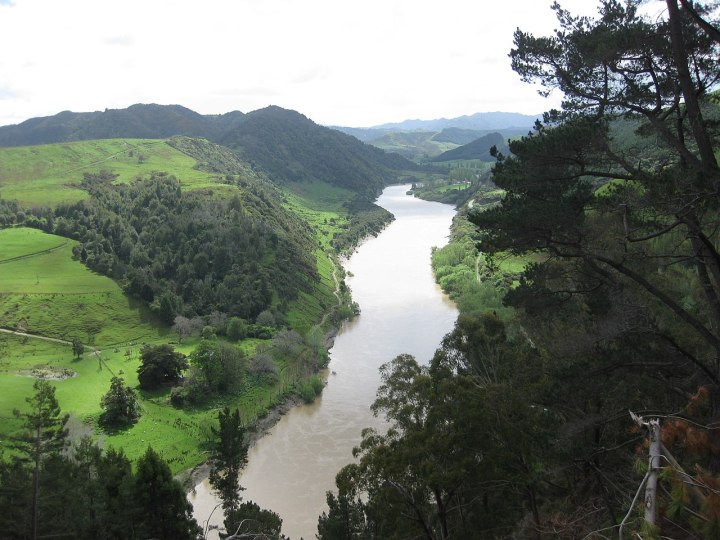
This might seem slightly esoteric discussion with little practical application, but there are places that are experimenting with the idea that rivers and other parts of nature should be granted rights in the same way that humans are now assumed to have rights. Over recent years, the Altrato River in Colombia (2016), the Whanganui River in New Zealand (2017), both the Ganges and its tributary the Yamuna in India (2017) and the Magpie River in Canada (2021)have all been granted legal rights by their respective governments. In2010 Bolivia enacted an even wider law granting rights to “mother earth” and in 2018 Ecuador embedded similar protections within its constitution. All these initiatives have been driven by indigenous communities which regard the natural world as part of their extended kinship network. Maybe Psalm 148 might inspire Christian and Jewish groups to connect with and support this movement.
A modern worship song clearly influenced by Psalm 148, possibly via St Francis of Assisi’s Canticle of the Sun and/or the hymn All creatures of our God and king.
 Large Blue