
The sixth in a series of posts on common but differentiated responsibilities. You can read the first here.
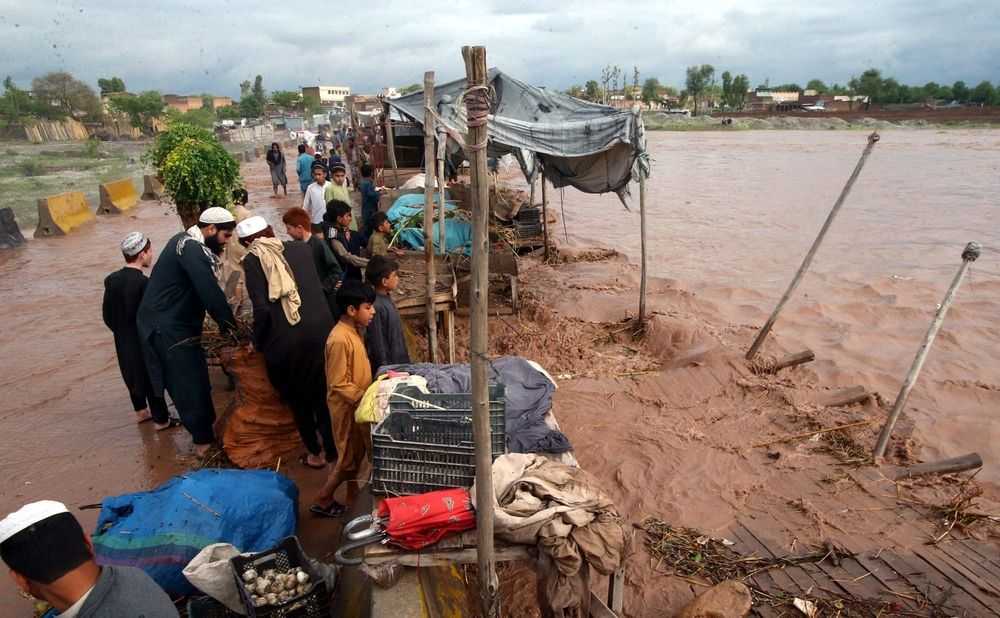
Demands for the recognition of common but differentiated responsibilies for climate change are rooted in what we now regard as a call for climate justice. It is the rich who have been responsible for the overwhelming majority of the greenhouse gas emissions that are driving climate change. The poor are suffering most from that change. This is partly because, largely by coincidence, climate change has disproportionate impacts on the areas of the world were poorer people live (parts of Africa, South America and southern Asia) and partly because their poverty makes them less resilient to those impacts. Natural justice demands that the rich, who have caused the problem, should bear the responsibility for limiting and alleviating the suffering of the poor that it has resulted in. It also demands that they should bear responsibility for reducing their emissions to reduce future impacts. One of the main acheivements of the United Nations Framework Convention on Climate Change (UNFCC) was to have this recognised in international law.
International law imposes responsibilities on countries rather than people. At the time this was not a particular problem because a division of the world into developed and developing1 countries was reasonably effective in delineating the rich from the poor and high emitters from low emitters. It made sense to differentiate responsibilities for responding to the challenge along the same lines, developed countries were required to shoulder more of the burder than developing countries.
Over the last thirty years, however, the distribution of wealth and carbon emissions across the planet has changed (as described in an earlier post). First, many of the original developing nations, particularly those with large populations, have developed rapidly and are now substantial emitters of greenhouse gases. Second, development in these countries and continuing development in the already developed countries has created more inequality in responsibility for carbon emissions within countries than between them. A framework that allocates responsibilities only at a national level and does so on a crude distinction between developed and developing countries is no longer fit for purpose. This post will explore how the framework could be adapted to more fairly allocate responsibilities between countries and the next will explore how the allocation of responsibilities within countries can be addressed.
Looking forward, one major problem is the continuing emission of greenhouse gases. A climate justice based approach to this might be to assume that each individual on the planet should share an equal responsibiltiy for emissions and therefore that the aim should be for the harmonisation of per person emissions. As described in the last post, the data to do this is already widely available and allows a basis for a much more nuanced approach than the original binary division of countries.
If the immediate target for this were set to be the current global average emissions per person then it would require the worst emitters on a per capita basis to make the greatest reduction in emissions. Most of the countries orginally labelled as “developed” still have emissions per person that are higher than the global average so would have a continuing responsibility to reduce these. Those developed countries that have been least successful in reducing emissions since the original agreement (such as USA, Canada and Australia) would be required to make greater emissions now – which also appears just. Developed countries, such as most of those in the Europe, that have been successful in reducing emissions would have a reduced requirement to reduce future emissions. This approach would also capture a range of countries who were not orginally categorised as “developed” but which still have high levels of emissions per person. The most obvious of these are countries with large fossil fuel reserves and are profligate in their use, such as the gulf states, Russia and other former members of the USSR.
Across Africa, South America and parts of Southern Asia are many countries originally labelled as “developing” but which have not developed particularly quickly. These need more investment for further sustainable development to lift their inhabitants out of poverty. These countries, however, have emissions per person which are well below the global average and would still have considerable headroom for development. India and Africa, for example, have per person emissions that are about half the global average and would be entitled to grow their economies in a way that generated more than their current emissions.
The final group of countries are those who were originally categorised as “developing” but who have been successful in that development and are now themselves responsible for substantial emissions of greenhouse gases. China and South Korea are probably the most notable examples. Allocating emisisons on a per person basis would naturally increase the responsibility on such countries without requiring a renogotiation of how groups of countries should be labelled.
From a perspective of climate justice, allocating emissions targets to harmonise global emissions per person would appear to address many of the deficiencies of the existing system. Fixing a target of the current global average, however, will not reduce emissions. By definition, if all countries emitted the global average emissions per person then global emissions would remain the same. Such an approach thus has to be aligned with “science-based” approaches outlined in the last post but one. Global targets should still be based around harmonising emissions per person, and the target for the immediate future could be set as the current global average, but future targets should be reduced in line with a science based understanding of the carbon budget available to hold global temperature rises within the limits specified by the Paris Climate Change Agreement.
This approach is not new. At about the same time as the phrase “common but differentiated responsibilities” was being introduced, the Global Commons Institute, a group of British climate activists led by Aubrey Meyer, proposed the Contraction and Convergence model which is essentially what I’ve described here (being picky, I’ve described a convergence and contraction model!). They published a “Contraction and Convergence Statement” in the Guardian newspaper in 1991 with 250 signatures from British parlimentarians and representatives of a wide range of environmental agencies. The ideas have been debated several times in the House of Commons, were discussed at the ill-fated Copenhagen Climate Summit (CoP 15 in 2009), and continue to be referred to in a wide range of publications.
There are some technical issues with this approach. Perhaps the most obvious is which measure of emissions to use. The most robust data available is for territorial emissions, those emitted from within a country’s borders. Allocating emissions responsibilites on territorial emissions, however, penalises countries who may be emitting greenhouse gases in manufacturing goods which will be exported for final use in other countries. As labour costs tend to favour manufactuing in under- developed countries, this could place an unjust burden on many developing countries and provide a barrier to such development. Basing calculations on consumption-based emissions would be more just and might encourage high-consuming nations to support other countries to develop low-emissions manufactuing techniques. There is a particular issue with emissions arising from change of land use which is now most common in developing countries but driven largely by the demand for meat in developed nations. A recent scientific paper from a group working at the University of Manchester within the Tyndall Centre for Climate Change Research provides a methodology for working through most of these details, although they apply it to a different underlying model (reductions based on current emissions rather than a global per person average).
In summary, there seems an obvious and just pathway to differentiate responsibilities for future greenhouse gas emisisons between countries. Recent developments in the science and data availability provide a framework for calculating targets in line with this. The conceptual basis of this approach has been available for as long as a just differentiation of climate responsibilities have been debated, but has so far gained little political traction. Unfortunately that political traction appears even less likely today in a world that seems to be moving towards less, rather than more, international collaboration on global issues.
Read the next post in this series at this link.
- Although the division of the world into developing and developed countries is generally regarded as outdated, the terms will be used here as they are those used in much of the historical literature on which these posts are based. ↩︎
 Large Blue